Why Most Beginners Fail at Mastering Their New Air Purifier (And The Layered Approach That Actually Works)
You just bought a new air purifier, lured by the promise of cleaner air, fewer allergens, and perhaps a better night’s sleep. You unboxed it, plugged it in, hit ‘auto mode,’ and… now what? A week later, you might notice the dust bunnies are still multiplying, your allergies haven’t magically vanished, and that persistent cooking odor still lingers. You’re left wondering if you wasted your money, or if air purifiers are just another overhyped gadget.
In my experience, this frustration is incredibly common. Most beginners approach their new air purifier as a ‘set it and forget it’ solution, expecting a single device to solve all their indoor air quality problems. What they don’t realize is that effective air purification isn’t a passive activity; it’s a layered strategy. It’s about understanding the specific challenges of your environment, the limitations of your device, and how small, consistent adjustments can make a profound difference. I’ve seen countless friends and family members make the same mistakes, only to be disappointed. What changed everything for me, and for them, was moving beyond the basic ‘on’ switch and embracing a more thoughtful, multi-faceted approach.
Key Takeaways
- Generic ‘auto mode’ settings often underperform because they don’t account for specific room dynamics or diverse pollutant types.
- Strategic placement, not just convenience, dictates an air purifier’s true effectiveness in capturing airborne particles.
- Relying solely on a single air purifier neglects the crucial role of proactive ventilation and source control in maintaining air quality.
- Neglecting filter maintenance drastically reduces efficiency and can even reintroduce pollutants into your purified air.
The ‘Auto Mode’ Illusion: Why One Setting Doesn’t Fit All
When you first plug in your air purifier, it’s tempting to just hit the ‘auto’ button and trust the machine to do its job. After all, it’s ‘smart,’ right? It has sensors, it adjusts fan speeds – what more could you need? The mistake I see most often is this blind faith in automation without understanding its limitations. Most air purifier auto modes rely on a single particulate matter (PM2.5) sensor. While PM2.5 is a critical pollutant, it’s far from the only one, and a single sensor only tells a partial story of your room’s air quality.
Consider my friend, Mark, who bought a top-rated air purifier for his open-concept living room and kitchen. He set it to auto, assuming it would handle everything. But during cooking, especially frying, the PM2.5 levels would spike, the purifier would roar to life, and then quiet down a half-hour later. Yet, the cooking odors, volatile organic compounds (VOCs), and lingering grease particles were still noticeable. His expensive machine was doing its job for PM2.5, but it wasn’t addressing the full spectrum of pollutants generated in a kitchen environment. He also failed to consider the sheer volume of air in his large space; a unit sized for a bedroom was struggling to keep up with an entire floor plan.
The critical insight here is that auto mode is a starting point, not a complete strategy. You need to understand what your air purifier’s sensors are actually detecting. If your primary concern is pet dander, pollen, or dust, an auto mode reacting to PM2.5 might suffice. However, if you’re battling smoke, strong odors, VOCs from new furniture or cleaning products, or even mold spores, you need a more deliberate approach. What changed everything for Mark was learning to manually override auto mode during high-pollutant events. He now cranks up the fan speed to maximum during cooking or when he’s cleaning with chemicals, running it for an hour or two after the initial spike, ensuring those VOCs and odors are truly filtered out. He also runs it on a higher manual setting when pollen counts are extreme, providing continuous, aggressive filtration that auto mode simply wouldn’t initiate based solely on ambient PM2.5.
Placement: Not Just Convenient, But Crucial for Effectiveness
Where you put your air purifier matters far more than you might realize. Many people place it in a corner, tucked away, or next to a wall because it’s out of the way or near an outlet. This is a fundamental error. Air purifiers work by drawing in air, filtering it, and expelling clean air. If you obstruct its intake or output, you drastically reduce its efficiency and the circulation of purified air throughout the room.
I once helped my sister, Sarah, troubleshoot her air purifier. She had it nestled between her sofa and a bookshelf in her bedroom. She complained it wasn’t helping her allergies at all. The problem was immediately obvious: the intake vents, typically on the back or sides, were almost entirely blocked by the furniture. The purified air, if any, was simply getting trapped in a small pocket, unable to circulate effectively.
The rule of thumb I follow is simple: treat your air purifier like a small, powerful fan. It needs space around it to breathe. Ideally, it should be placed in the main area of the room, away from walls and large furniture, to allow for 360-degree air circulation. If that’s not possible, ensure that the intake and exhaust vents are completely unobstructed. For Sarah, simply moving her unit to a more central location in the room, about a foot and a half from any obstruction, made an immediate, noticeable difference. Her allergy symptoms improved significantly within days because the air was finally circulating and getting filtered properly.
Furthermore, consider the direction of airflow. If you have a room with a specific problem area, like a dusty corner or a pet’s bed, place the purifier between the source of pollution and where you spend most of your time. This ensures that the polluted air is captured before it reaches your breathing zone. This strategic placement, rather than just convenient placement, is a game-changer for actual air quality improvement.
The Overlooked Power of Ventilation and Source Control
An air purifier is a filter, not a magic air-scrubbing machine that eliminates the need for other air quality practices. A common misconception is that once you have a purifier, you can seal yourself off from the world. This couldn’t be further from the truth. Effective indoor air quality management is a multi-pronged attack that includes ventilation and source control. Ignoring these elements severely limits what your air purifier can achieve.
Think about John, who moved into an older apartment building. He bought an air purifier to combat the stale air and occasional dust. But he rarely opened his windows, and his bathroom fan was more decorative than functional. He also loved scented candles and used harsh chemical cleaners. His air purifier was constantly working overtime, fighting a losing battle against continuous sources of pollution and a lack of fresh air exchange.
What truly works is a holistic approach. Ventilate regularly. Even five to ten minutes of opening windows daily can dramatically reduce indoor air pollutant concentrations by bringing in fresh outdoor air. If outdoor air quality is poor (e.g., high pollen, wildfire smoke), keep windows closed and rely on your purifier, but on a normal day, ventilation is your friend. Use exhaust fans in kitchens when cooking and in bathrooms when showering to remove moisture and odors at the source.
Practice source control. Reduce or eliminate sources of indoor air pollution. This means choosing low-VOC paints and furnishings, opting for natural cleaning products, avoiding synthetic air fresheners, and, if possible, keeping pets out of bedrooms if you have allergies. If you burn candles, choose soy or beeswax and limit their use. For John, the biggest impact came from opening his windows for short bursts, consistently using his kitchen fan, and switching to unscented, natural cleaning sprays. His air purifier could then focus on the fine particulate matter and residual allergens, rather than constantly battling fresh waves of VOCs and odors. This combined effort drastically improved the overall feel and health of his indoor environment.
Filter Neglect: The Hidden Cost of ‘Set and Forget’
This is perhaps the most egregious and widespread mistake I see: neglecting filter maintenance. Many beginners assume filters last indefinitely or that the machine will tell them exactly when to change them. While some purifiers have indicators, these are often based on a timer or basic runtime, not on the actual particulate load the filter has processed. A clogged, dirty filter doesn’t just reduce your air purifier’s effectiveness; it can actually become a source of pollution itself.
I recently visited my aunt, Carol, who swore her air purifier had stopped working. It was humming away, but her dust allergies were flaring up. Upon inspection, her HEPA filter was a solid grey-black, thick with accumulated dust and pet dander. It looked like a furry brick. The pre-filter was completely choked. The air purifier was effectively just blowing dirty air around because the filter media was saturated and couldn’t capture new particles. In fact, some older, cheaper filters can even start to off-gas accumulated pollutants once they are fully saturated.
Regular filter inspection and replacement are non-negotiable. For pre-filters (the first layer of defense, usually washable), I recommend cleaning them every 2-4 weeks, especially if you have pets or live in a dusty environment. For HEPA and activated carbon filters, check your manufacturer’s recommendations, but typically expect to replace them every 6-12 months. However, this timeline needs to be adjusted based on usage and air quality. If you live in an area with high pollution, run your purifier continuously, or have multiple pets, you’ll need to replace them more frequently – sometimes as often as every 3-4 months.
What worked for Carol, and what I recommend to everyone, is to visualize your filter. Pull it out regularly and actually look at it. You’ll be surprised how quickly it accumulates grime. Set a reminder on your phone or calendar, not just for replacement, but for a monthly visual check. The cost of new filters might seem steep, but it’s a necessary investment for genuinely clean air. Running a purifier with a clogged filter is akin to driving a car with a flat tire – it’s still moving, but doing more harm than good and not getting you where you need to go effectively.
The Room Size Miscalculation: Bigger Isn’t Always Better, Nor Is Smaller Adequate
Another common pitfall for beginners is misjudging the appropriate air purifier size for their space. There’s a tendency to either buy a small, inexpensive unit for a large room and expect miracles, or to buy an oversized unit that’s overkill and unnecessarily noisy or costly. The effectiveness of an air purifier is heavily dependent on its Clean Air Delivery Rate (CADR) relative to the room’s square footage.
My neighbor, Tom, bought a compact air purifier for his large, high-ceilinged home office, about 400 square feet. The packaging proudly stated it was ‘suitable for large rooms.’ The problem? That claim was often based on a single air change per hour (ACH) in ideal conditions, whereas most experts recommend at least 4-5 ACH for effective allergen and particulate removal. Tom’s small purifier was barely managing 1-2 ACH in his actual space, meaning the air was not getting filtered quickly enough to make a noticeable difference.
Conversely, some people might buy a very powerful unit for a small bedroom, leading to unnecessary noise, higher energy consumption, and filters that get saturated faster than needed, driving up replacement costs. This ‘more power is better’ mentality isn’t always efficient.
The strategy that actually works is to match the CADR to your room size and desired air changes per hour. Look for the CADR ratings for smoke, dust, and pollen on the product specifications. A general guideline is to multiply your room’s square footage by its ceiling height (if standard 8 ft, just use square footage) and then ensure your purifier’s CADR is sufficient for 4-5 air changes per hour. Most reputable brands provide clear room size recommendations that account for this. If you have severe allergies or multiple pets, err on the side of slightly larger CADR. For Tom, upgrading to a unit with a CADR nearly double that of his original, and specifically rated for his office size, finally delivered the relief he was looking for. Don’t just go by vague marketing; do the math for your specific space.
Ignoring the Air Quality Monitor: Blindly Trusting the Invisible
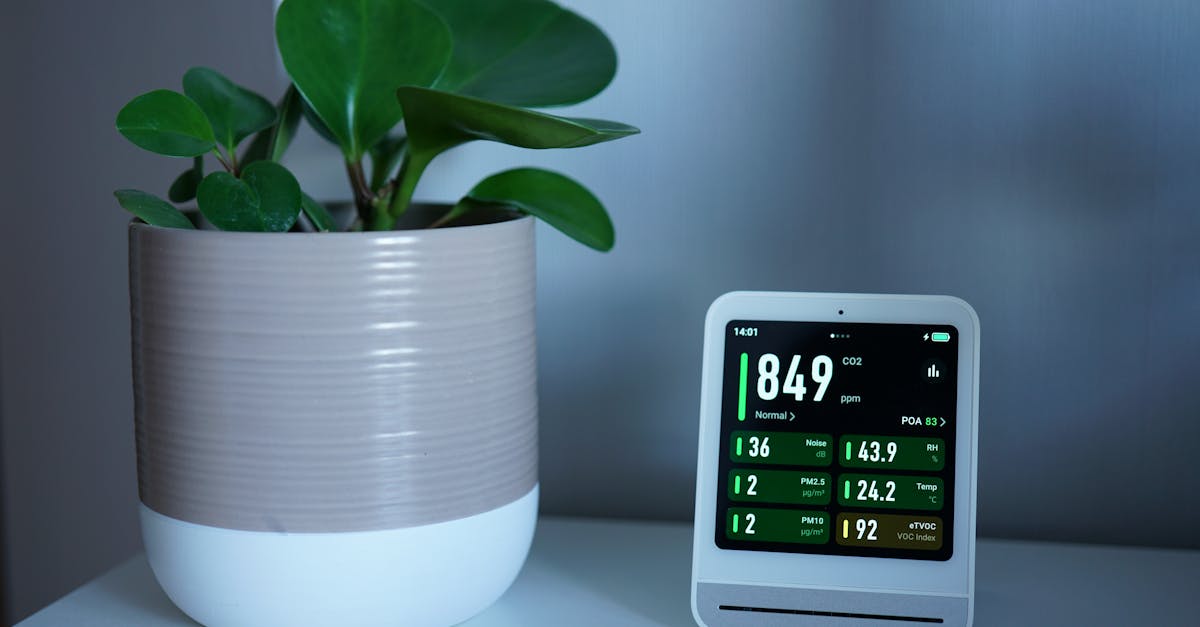
Many beginners fail to invest in or properly utilize an external air quality monitor, relying instead on vague assumptions or their purifier’s often-limited built-in sensors. Indoor air quality is invisible, and without objective data, you’re essentially flying blind. This leads to inefficient use, wasted energy, and continued exposure to pollutants you’re not even aware of.
Consider Maria, who was concerned about general indoor pollution. She bought an air purifier, but after a few weeks, felt no different. She assumed it was working because the indicator light was blue, or it was running on ‘auto.’ However, she had no idea what her baseline air quality truly was, nor if her purifier was actually making a significant impact on specific pollutants.
What changed everything for Maria was purchasing a dedicated, multi-sensor air quality monitor. She discovered that while her PM2.5 levels were indeed dropping, her VOC levels often remained high, especially after she cleaned her apartment or used hairspray. Her purifier’s single PM2.5 sensor wasn’t detecting these. The external monitor gave her actionable data, allowing her to understand when and what pollutants were present.
This knowledge empowered her to adjust her strategy: she started opening windows more after cleaning, switched to a purifier with a dedicated VOC filter, and ran it on a higher manual setting when the monitor detected spikes. An external air quality monitor is your air quality diagnostic tool. It helps you:
- Establish a baseline: Understand what your air quality is like normally.
- Identify specific problems: Pinpoint sources of pollution (e.g., VOCs from cooking, formaldehyde from new furniture).
- Verify effectiveness: See if your purifier, ventilation, and source control efforts are actually making a difference.
- Optimize usage: Run your purifier only when needed, or on specific settings for certain pollutants, saving energy and filter life.
By seeing the invisible, you can make informed decisions, rather than just hoping your purifier is doing its job. This level of data-driven understanding is what truly allows you to master your indoor air quality and get the most out of your investment.
Frequently Asked Questions
Q: How often should I run my air purifier?
A: For optimal air quality, especially if you have allergies, pets, or live in a polluted area, run your air purifier continuously, 24/7. Modern purifiers are designed for this and are energy-efficient. If you only run it occasionally, it won’t have enough time to cycle the air effectively and reduce pollutant concentrations.
Q: Can I use one air purifier for multiple rooms?
A: It’s generally not recommended. Air purifiers are most effective in the room they are placed in. While a powerful unit in a central location might offer some benefit to adjacent open areas, it cannot effectively purify the air in separate, closed-off rooms. For best results, consider a dedicated unit for each room where you spend significant time, especially bedrooms.
Q: What’s the difference between a HEPA filter and an activated carbon filter?
A: A HEPA (High-Efficiency Particulate Air) filter is designed to capture tiny airborne particles like dust, pollen, pet dander, mold spores, and smoke particles. An activated carbon filter is designed to absorb odors, gases, and volatile organic compounds (VOCs) through a process called adsorption. Most effective air purifiers use a combination of both.
Q: Will an air purifier help with dust?
A: Yes, a good air purifier with a true HEPA filter can significantly reduce airborne dust particles, which helps reduce the amount of dust that settles on surfaces. However, it won’t eliminate the need for regular cleaning, as many dust particles settle quickly before being captured. Think of it as a supplementary tool to your cleaning routine.
Q: My air purifier seems loud. Is that normal?
A: Air purifiers produce noise, primarily from the fan, especially on higher settings. The noise level (measured in decibels, dB) increases with fan speed. Smaller, cheaper units sometimes sound louder even on low settings because they use less efficient fans. Consider the CADR for a unit’s noise output; a higher CADR at a lower dB is usually preferable. Strategic placement away from walls can also help reduce perceived noise by avoiding sound reflections.
In conclusion, mastering your new air purifier goes far beyond plugging it in and pressing ‘auto.’ It requires a shift in perspective from a passive expectation to an active, informed strategy. By understanding the nuances of placement, embracing proactive ventilation and source control, diligently maintaining your filters, accurately sizing your unit, and leveraging external air quality data, you can transform your indoor environment from stale and irritating to truly fresh and healthy. Don’t let your investment gather dust, literally – take control of your air quality and breathe easier, knowing you’re making a genuine difference to your well-being. Start by checking your filters today; it’s a small step that yields immense returns.
Written by Clara Jenkins
Health & Wellness, Home Life, Hobbies & Recreation
With a background in lifestyle journalism, Clara focuses on health, wellness, and everyday living.
You Might Also Like

Why Most Beginners Fail at Mastering Meditation (And My Layered Approach That Actually Works)
Discover why traditional meditation advice often fails beginners and how a layered, practical approach can lead to lasting calm and focus.
Why Most Beginners Fail at Mastering Their New Electric Toothbrush (And What Actually Works for a Truly Clean Feel)
Electric toothbrushes promise a superior clean, but many beginners miss the crucial steps to unlock their full potential. Discover why most fail and what actually works for a truly clean feel.

Why Most Budget Home Gyms Fail (And What Actually Works for Sustainable Fitness)
Discover why many budget home gyms fall short of expectations and learn what truly works for achieving sustainable fitness goals at home.